Class A Fire Rated Wood Fencing for Austin Premium Materials That Pass Code
- Benjamin Baker
- Aug 25
- 9 min read

US Lumber Broker: Your Texas Supplier of Class A Fire Rated Woods
Austin’s growth has pushed custom homes, multifamily projects, and neighborhood infill closer to areas where wildfire risk shapes the design conversation. A fence can no longer be treated as a finish item selected at the end of the project. In many locations, especially near the Hill Country, Lake Travis, greenbelts, and wooded edges, fencing belongs in the same early code review as roofing, siding, decks, and eaves.
For architects and builders, the challenge is clear. Clients still want the warmth of real wood. Municipal reviewers still need documentation. Field crews still need material that installs cleanly and holds up in Texas weather.
Class A fire-rated wood fencing helps bridge those needs. It gives residential and commercial projects a natural look while supporting fire-safety goals and smoother permitting. The key is knowing what “Class A” means, how it relates to Wildland-Urban Interface requirements, and what paperwork needs to follow the material from specification to final inspection.

Fire-rated wood fencing matters more in Austin than it used to
Austin has always had a close relationship with the land around it. That is part of the appeal. Sloped lots, oak canopies, cedar breaks, and lake-area views all help define the region’s residential character.
Those same features can increase wildfire exposure.
A fence can act as a path for flame or embers if it connects combustible vegetation to a house, deck, gate, or accessory structure. This is especially important where fencing runs close to exterior walls, wraps around outdoor living spaces, or ties into trash enclosures and equipment screens.
Fire-rated fencing does not make a property fireproof. No single material can do that. What it does is reduce one source of risk when paired with careful design, defensible space, and compliant construction details.
For higher-end residential projects, the value goes beyond basic compliance. A well-specified fire-rated wood fence tells the client that the design team thought through performance, not just appearance. It also helps avoid the frustrating late-stage problem of a beautiful fence detail getting rejected during plan review.
Action step: confirm the project’s Wildland-Urban Interface status with the city, county, or authority having jurisdiction before finalizing the fence specification. Early clarity prevents redesigns, substitutions, and inspection delays.
What Class A means for wood fencing
“Class A” usually refers to the highest rating in a surface burning test, commonly associated with a low flame spread index. In plain language, a Class A-rated material has been tested and shown to spread flame more slowly than lower-rated materials under the conditions of the test.
That does not mean every Class A product meets every exterior code requirement on every project. Local adoption, project type, fence location, and WUI mapping all matter.
When a project calls for fire-rated wood fencing, the specification should identify:
The wood species or product type
The fire-retardant treatment
The testing standard used
The rating achieved
Any limitations for exterior exposure
Required fasteners, coatings, or end-cut treatment
Documentation needed for the permit set
Austin-area jurisdictions may refer to adopted building codes, local amendments, and WUI-related standards. Some projects require ignition-resistant materials in certain locations. Others may allow approved fire-retardant-treated wood with the right documentation.
The safest approach is to avoid vague notes such as “fire-rated wood fence by others.” Instead, specify the product, rating, installation requirements, and submittals. If an inspector asks for proof, the builder should be able to produce it without calling three suppliers from the jobsite.
WUI requirements affect more than the fence boards
Wildland-Urban Interface rules focus on how buildings and nearby site elements perform when exposed to embers, radiant heat, or flame. Fencing can matter because it often touches or approaches the structure.
A fence that stops 10 feet from a house creates a different risk profile than one that attaches directly to a wood-clad wall. A short privacy screen around mechanical equipment raises different questions than a continuous property-line fence running through dense vegetation.
Design teams should pay close attention to these common conditions:
Fence condition | Why it matters | Specification response |
Fence attached to the house | Fire can transfer from fence to structure | Use approved fire-rated or noncombustible material at the connection |
Fence near vegetation | Dry grasses and brush can expose boards to flame | Pair rated material with defensible space planning |
Gates near side yards | Gates often sit close to walls, meters, or trash storage | Review hardware, posts, and clearance details |
Pool and outdoor living areas | Clients expect premium wood finishes | Use rated wood products with exterior durability documentation |
Sloped Hill Country lots | Fire can move uphill quickly in dry conditions | Avoid continuous combustible paths where possible |
This is where the phrase Class A Fire Rated Wood Fencing for Austin Premium Materials That Pass Code becomes more than a headline. Passing code depends on both the material and the assembly. The exact same board can be acceptable in one location and questioned in another if the design creates a risky connection.
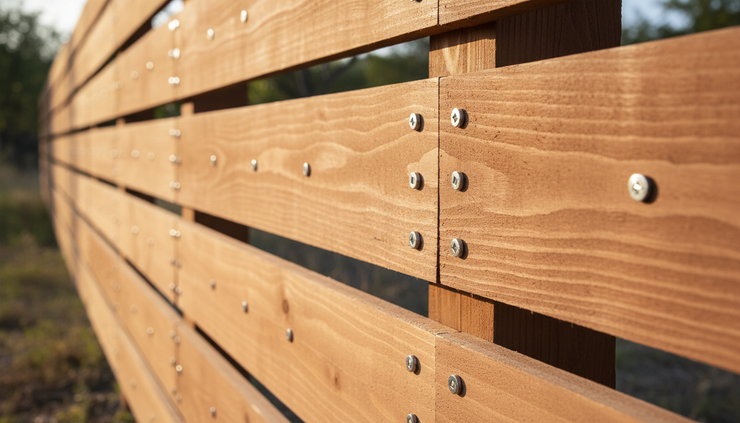
Premium materials can still look like real wood
Some builders worry that fire-rated fencing will look flat, artificial, or overly commercial. That concern usually comes from seeing poor substitutions, not from the limits of the category itself.
Premium fire-rated wood fencing can preserve the qualities clients ask for:
Visible grain
Warm color
Natural variation
Clean milling
Modern profiles
Compatibility with stone, stucco, steel, and native landscaping
The material choice starts with the project goal. A modern home may call for horizontal boards with narrow shadow lines. A ranch-inspired property may fit better with vertical boards and heavier posts. A commercial or multifamily project may need a more uniform appearance across long runs.
Fire-retardant-treated wood can be produced from species and profiles suited to exterior fence construction, but not all treated products are equal. Some treatments are meant for interior use only. Some require field-applied sealers. Some may have restrictions for ground contact or repeated wetting.
Before specifying a product, confirm that it is rated for exterior exposure and appropriate for the fence assembly. Texas heat, UV exposure, sudden storms, and sprinkler overspray can all punish materials that looked good on paper.
Good suppliers should be able to provide:
Product data sheets
Testing documentation
Treatment information
Storage and handling guidance
Installation requirements
Finish compatibility notes
Warranty information, when available
If that paperwork is missing, the product is not ready for a code-sensitive project.
Code compliance starts in the specification
A clean specification saves time. It gives the plan reviewer, contractor, installer, and inspector the same set of facts.
For Austin-area projects, a practical fence specification should include language that addresses both performance and appearance. It should not rely on a generic “cedar fence” note if fire rating is part of the requirement.
A better specification might include:
Approved fire-rated wood product or approved equal
Required Class A rating or listed performance criteria
Exterior-use fire-retardant treatment
Board size, profile, and orientation
Post material and spacing
Fastener type suitable for treated wood
End-cut treatment requirements
Required finish or sealer
Minimum clearances where applicable
Submittal documents before installation
The phrase “approved equal” should be used carefully. It should not open the door to a visually similar but untested product. If substitutions are allowed, require equivalent rating documentation and approval before purchase.
This is especially important on custom homes, where fence details may match gates, outdoor showers, pool enclosures, equipment screens, and trash areas. One undocumented substitution can affect several parts of the project.

The best fence details reduce risk without looking defensive
Fire-conscious design does not need to make a home feel like a bunker. The best details feel intentional and natural.
Start with the areas closest to structures. If a fence connects to the home, review that connection carefully. In some cases, a noncombustible transition panel, metal gate section, masonry return, or short break in the fence line may help reduce risk while preserving the overall wood design.
Next, think about the ground plane. Dry leaves, mulch, and grasses collecting at the base of a fence can undermine the benefit of a rated material. Gravel strips, stone edging, and regular maintenance can help limit fuel at the fence line.
Then look at the top of the fence. Caps, trim, and decorative profiles can collect debris. Simpler profiles are easier to keep clean and may age better under heat and UV exposure.
Good design choices include:
Keeping combustible debris from gathering against the fence
Avoiding unnecessary wood-to-structure connections
Using metal posts or steel frames where the design allows
Choosing simpler profiles that shed water and debris
Leaving access for inspection and maintenance
Coordinating landscape plans with the fire-rated assembly
These choices rarely change the character of the project. They simply make the fence work better.
Proper installation protects the rating
A tested material can lose value when installed poorly. Fire-rated wood fencing needs thoughtful handling before and during installation.
The crew should store boards off the ground, protect them from standing water, and follow all manufacturer instructions. If boards are cut in the field, the installer may need to treat exposed ends with an approved product. If the specification calls for a compatible sealer or finish, skipping that step can affect appearance, durability, or compliance.
Fasteners also matter. Some treated wood products require corrosion-resistant hardware. Using the wrong nails or screws can lead to staining, early corrosion, or weakened connections.
Field crews should know the answers to these questions before work starts:
Can boards touch the ground?
Are field cuts allowed?
What end treatment is required?
What fasteners are approved?
Is a finish required before or after installation?
Are there spacing requirements for airflow or drainage?
Does the product need labels or documentation saved for inspection?
A pre-installation meeting may feel unnecessary for a fence, but it can prevent expensive rework. This is especially true when the fence is part of a larger exterior package with gates, masonry, landscape lighting, and irrigation.
Maintenance is part of the fire-safety plan
Fire-rated wood fencing still needs care. Austin’s climate brings hot summers, sudden rain, high UV exposure, and seasonal debris. A maintenance plan keeps the fence looking better and supports the design intent over time.
Homeowners and property managers should inspect the fence at least seasonally. The goal is simple: keep the material clean, dry when possible, and free from fuel buildup.
Useful maintenance steps include:
Remove leaves, dry grass, and mulch buildup along the base
Trim shrubs and branches away from boards
Check for cracked, loose, or damaged sections
Reseal or refinish based on product guidance
Keep irrigation spray from soaking the fence
Replace damaged boards with the same approved material
Do not assume any replacement board will perform like the original. If a storm, vehicle impact, or remodel damages part of the fence, replacement materials should match the documented rating and treatment.
For builders, this is a good handoff item at project closeout. Include fence product information in the owner’s maintenance package, along with finish instructions and supplier details.

What to ask before ordering fire-rated wood fencing
The right questions can separate a compliant premium product from a risky guess. Before ordering, confirm the basics with the supplier and design team.
Ask these questions early:
Is the product rated for exterior fence use?
Interior fire-retardant treatments are not automatically suitable outdoors.
What documentation proves the rating?
Product data and test information should be available before permit review or procurement.
Does the treatment affect fastening, cutting, or finishing?
Installers need clear instructions, not assumptions.
Can the material meet the visual standard of the project?
Premium homes need both performance and clean appearance.
Are posts, gates, caps, and trim included in the rating strategy?
A fence is an assembly, not just a board package.
Will the local authority accept this product for the specific condition?
When the fence connects to the structure or sits in a WUI area, confirm before installation.
These questions are simple, but they keep the design team from treating fire rating as a line item. That is where mistakes usually happen.
A better way to specify wood fencing in Austin
The future of fencing in Austin is not a choice between natural wood and code compliance. Better materials and clearer documentation make it possible to deliver both.
For architects, that means selecting fire-rated wood early and detailing the fence as part of the exterior fire strategy. For builders, it means buying from suppliers who can support the product with real documentation. For owners, it means getting the look they want with a smarter approach to risk.
The takeaway is practical: do not wait until the fence subcontractor is pricing the job to solve a WUI or Class A requirement. Confirm the site designation, choose an exterior-rated product, document the assembly, and install it according to the manufacturer’s requirements.
That approach protects the schedule, supports code review, and gives Austin projects the premium wood character clients expect without treating fire safety as an afterthought.


Comments